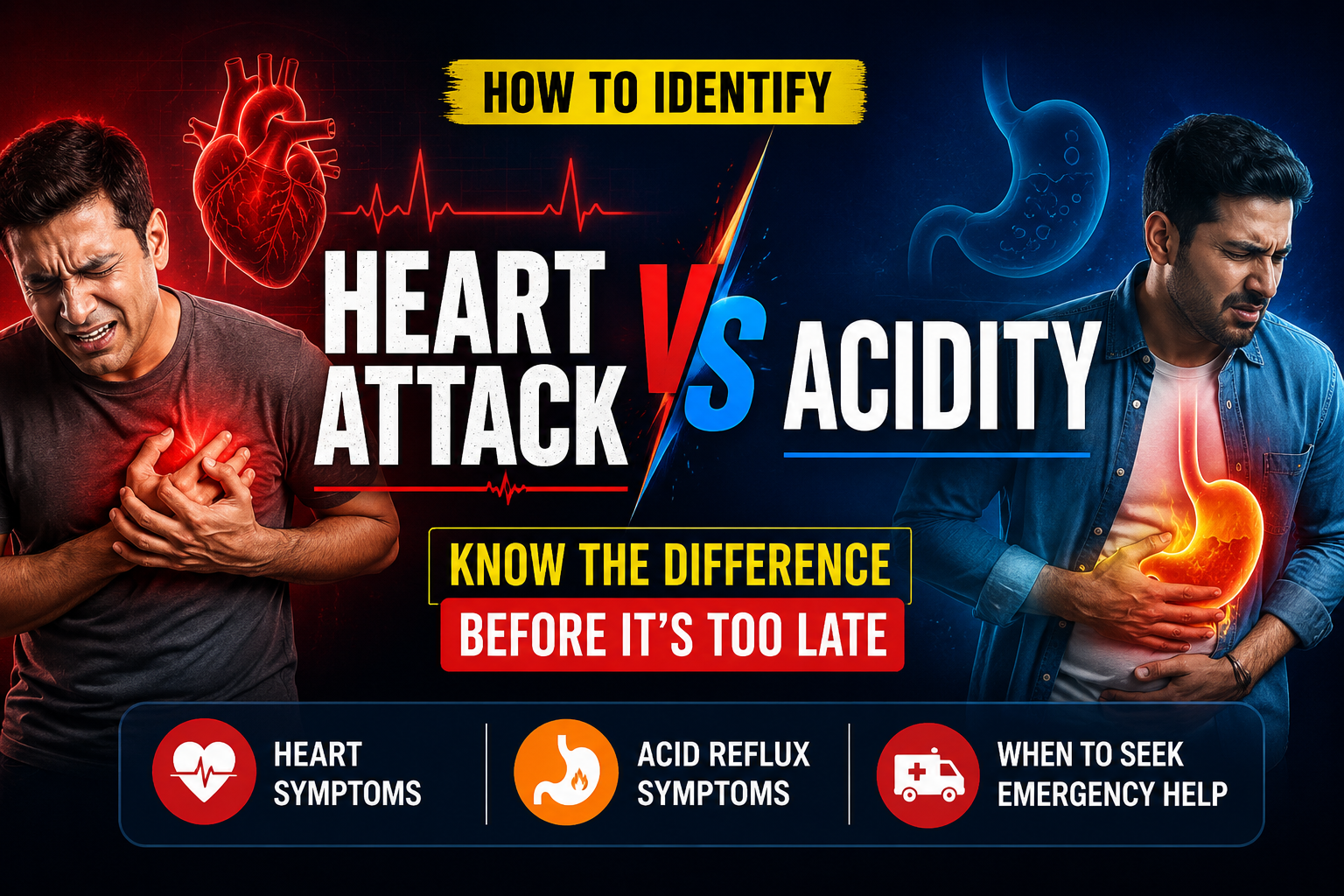
Heart Attack vs Acidity: Know the Difference Before It's Too Late
Introduction
Chest pain is one of the most alarming symptoms a person can experience—and one of the most confusing. Is it a heart attack, or is it just acidity?
This single question sends thousands of people to emergency rooms every year, and for good reason. Heart attack symptoms and acidity (acid reflux) symptoms can look strikingly similar, especially in the early stages. But confusing the two can be dangerous—even fatal.
As a healthcare content writer working closely with cardiologists and physicians, I've seen how often patients delay treatment because they assumed their chest discomfort was "just gas."
This guide explains the key differences between heart attack and acidity, helps you recognize warning signs, and outlines when you should seek immediate medical attention.
Why Heart Attack and Acidity Are Often Confused
Both conditions can cause:
- Chest discomfort or a burning sensation
- Pain radiating to the upper body
- Nausea
- Sweating
- Difficulty breathing
Because the esophagus and heart are located close to each other and share overlapping nerve pathways, the brain can sometimes misinterpret signals from one organ as pain from the other.
This phenomenon is known as referred pain, which is why acid reflux is sometimes mistaken for a heart attack—and vice versa.
What Is Acidity (Acid Reflux)?
Acidity occurs when stomach acid flows back into the esophagus, causing a burning sensation commonly known as heartburn.
Common Causes
- Spicy or oily foods
- Overeating
- Lying down immediately after meals
- Stress
- Excess caffeine
- Alcohol consumption
Symptoms of Acidity
- Burning sensation in the chest (usually after eating)
- Sour or bitter taste in the mouth
- Bloating
- Frequent belching
- Symptoms worsen when lying down
- Relief after taking antacids
What Is a Heart Attack?
A heart attack (myocardial infarction) occurs when blood flow to part of the heart muscle is blocked, usually because of a blood clot in the coronary arteries.
It is a medical emergency that requires immediate treatment.
Common Symptoms of a Heart Attack
- Chest pain or pressure
- Tightness or squeezing sensation
- Pain spreading to the left arm, jaw, neck, shoulder, or back
- Shortness of breath
- Cold sweating
- Lightheadedness
- Dizziness
- Nausea or vomiting
- Pain that does not improve with rest or antacids
Heart Attack vs Acidity: Key Differences
Feature | Acidity (Acid Reflux) | Heart Attack |
|---|---|---|
Nature of pain | Burning sensation | Pressure, squeezing, tightness |
Trigger | After spicy/oily meals | Physical exertion, stress, or at rest |
Relief | Improves with antacids | No relief with antacids |
Radiating pain | Rare | Common (arm, jaw, neck, back) |
Sweating | Uncommon | Common (cold sweat) |
Breathlessness | Rare | Common |
Timing | Usually after meals or lying down | Can occur anytime |
Duration | Comes and goes | Persistent or worsening |
The Antacid Test Isn't Reliable
Many people believe that if antacids relieve chest pain, it must be acidity.
While this may sometimes be true, it is not a reliable way to rule out a heart attack.
Some heart attack patients report temporary relief after taking antacids, creating a false sense of security and delaying life-saving treatment.
Never rely solely on an antacid response to determine whether chest pain is harmless.
Red Flag Symptoms That Suggest a Heart Attack
Seek emergency medical care immediately if you experience:
- Chest pain lasting more than a few minutes
- Chest pain that keeps returning
- Pain spreading to the jaw, neck, shoulder, back, or left arm
- Shortness of breath
- Sudden cold sweating
- Dizziness
- Fainting
- A feeling of impending doom
Do not wait to see if the symptoms improve. Every minute counts during a heart attack.
Who Is at Higher Risk of a Heart Attack?
The following individuals should be especially cautious when experiencing chest discomfort:
- People with diabetes
- High blood pressure (hypertension)
- High cholesterol
- Smokers
- Individuals with a family history of heart disease
- People who are overweight
- Physically inactive adults
- Men over 45 years
- Women over 55 years
- Women after menopause
Heart Attack Symptoms in Women
Heart attack symptoms in women often differ from the classic symptoms experienced by men.
Women may experience:
- Unusual fatigue
- Nausea
- Back pain
- Jaw pain
- Shortness of breath
- Indigestion-like discomfort
- Mild chest discomfort instead of severe chest pain
These atypical symptoms often result in delayed diagnosis, making early medical evaluation especially important.
Women managing hormonal health conditions should also stay proactive about cardiovascular screening. Consulting a specialist such as a gynecologist in Dwarka, Delhi can help identify hormone-related risk factors that may also affect long-term heart health.
Children, Family Health, and Early Awareness
Although heart attacks are extremely rare in children, building healthy habits early can significantly reduce future cardiovascular risk.
Regular pediatric check-ups can help identify:
- Childhood obesity
- Poor dietary habits
- High cholesterol
- Family history of heart disease
- Lifestyle-related risk factors
Parents seeking preventive care can consult a trusted pediatrician in Dwarka for guidance on maintaining long-term heart health for the entire family.
When Should You See a Doctor?
Do not ignore recurring chest discomfort.
Consult a cardiologist promptly if you experience:
- Frequent chest pain
- Chest pressure
- Breathlessness
- Symptoms during physical activity
- Any warning signs mentioned above
Doctors may recommend investigations such as:
- Electrocardiogram (ECG)
- Blood tests
- Echocardiography
- Stress test
- CT coronary angiography (when appropriate)
If you're in Delhi NCR and experiencing unexplained chest pain, consulting an experienced cardiologist in Dwarka for a thorough cardiac evaluation is far safer than attempting to self-diagnose.
How to Prevent Both Acidity and Heart Problems
Healthy lifestyle habits benefit both your digestive system and your heart.
Follow These Preventive Tips
- Eat smaller, more frequent meals
- Avoid lying down immediately after eating
- Reduce spicy, oily, and processed foods
- Exercise regularly
- Maintain a healthy body weight
- Control blood pressure, cholesterol, and blood sugar
- Quit smoking
- Limit alcohol intake
- Manage stress through meditation or relaxation techniques
- Schedule regular health check-ups, especially after age 40
Final Thoughts
The most important takeaway is simple:
Never self-diagnose chest pain.
While acidity is far more common and generally harmless, a heart attack is a medical emergency where every minute matters.
If you are ever unsure whether your symptoms are caused by acid reflux or a heart attack, treat the situation as an emergency and seek immediate medical attention.
It is always better to have a false alarm than to delay treatment for a potentially life-threatening condition.
Your heart health is too important to leave to guesswork. When symptoms are unclear, prompt professional evaluation can make the difference between reassurance and a life saved.
Discussion
0 Comments
Leave a Comment
Your email address will not be published. Newsletter subscribers are auto-approved; others are moderated for safety.
Author ProfileView Portfolio

Acroplus Health
Medical Content Specialist“
Medical Content Specialist with expertise in creating accurate, evidence-based, and engaging healthcare content. Skilled in translating complex medical concepts into reader-friendly articles, blogs, and educational resources for patients, healthcare professionals, hospitals, and medical organizations. Passionate about delivering trustworthy information that enhances health awareness and patient education.