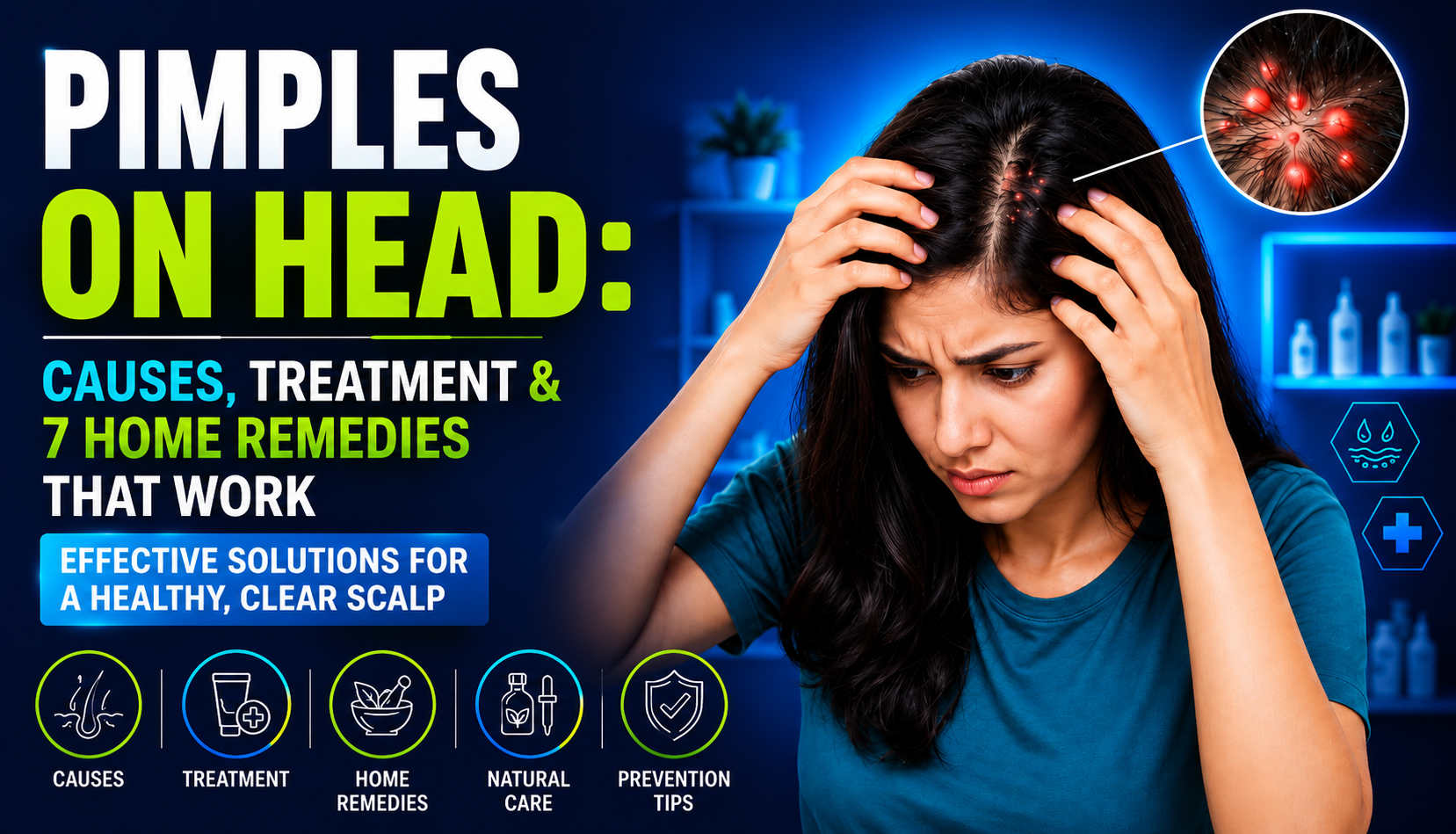
Pimples on Head: Causes, Treatment & 7 Home Remedies That Work
Have you ever felt a sore bump hiding under your hair? You press your fingers into your scalp and ouch. There it is. A pimple you did not even know was there until it started hurting.
Pimples on the head are very common. Most people deal with them at some point but almost nobody talks about them. That is because they are hidden under the hair and easy to ignore until they start itching, hurting or spreading.
This guide explains everything in simple terms. Why are you getting pimples on your head under your hair, what is causing them, which home remedies actually help and what shampoo works best for scalp pimples treatment.
What Are Pimples on the Head
Pimples on the head are small inflamed bumps that form on the skin under your hair. They can look like red bumps on the scalp, whiteheads, pustules on the scalp or even deep painful lumps you cannot see but can definitely feel.
Your scalp has more oil glands than almost any other part of your body. When those oil glands get blocked, bacteria grow inside them and cause pimples on the scalp. It is basically the same thing that happens on your face, just hidden under your hair.
Some people get one or two bumps near the hairline. Others find their scalp breaking out all over. Both situations are treatable and in most cases you can fix it at home.
Main Reasons for Head Pimples
Before jumping to treatment it helps to know the head pimples reason. Here are the most common causes:
1. Too Much Oil and Product Buildup
Dry shampoos, hair gels, heavy conditioners and hair oils sit on the scalp. Over time they mix with dead skin and block the hair follicles. This is one of the biggest head pimples reasons especially if your scalp is breaking out near the hairline or where you apply products most.
2. Bacterial Infection
When bacteria get inside a hair follicle they cause an infection called folliculitis. This is what creates those red pus-filled pustules on scalp that feel tender and sore when you touch them. It spreads through dirty combs, shared hats or unwashed pillowcases.
3. Fungal Overgrowth
A natural yeast on your scalp can grow out of control and cause inflammation. This leads to an itchy scalp with bumps, flaking and sometimes a burning feeling. People with dandruff often have this same issue happening at the same time.
4. Hormones
When your hormones change during stress, your period or puberty, your body makes more oil. More oil means more chances for pores to get blocked. This is why many people notice their scalp breaking out during stressful times even if nothing else in their routine changed.
5. Sweat and Heat
Wearing a tight hat or helmet or going to sleep with wet hair traps heat and sweat against your scalp. Bacteria love warm wet places. This is a very common head pimples reason for people who work out regularly or wear headgear.
6. Wrong Hair Products
Some shampoos and conditioners contain heavy ingredients that clog pores. If you recently switched products and your scalp started breaking out, the new product may be the cause.
Types of Scalp Bumps
Not every bump is a pimple. Here is a simple guide to tell them apart:
Type | How It Looks | How It Feels | Likely Cause |
|---|---|---|---|
Scalp pimple | Red bump sometimes with white tip | Tender | Blocked pore |
Folliculitis | Cluster of pustules on scalp | Itchy and painful | Bacterial infection |
Cyst | Large deep lump | Moves under skin | Blocked oil gland |
Allergic reaction | Flat red patches | Very itchy, burning | Product reaction |
Psoriasis | Silvery flaky patches | Itchy and dry | Immune condition |
If your itchy scalp with pimples is widespread or keeps coming back it is worth seeing a doctor to find out exactly what you are dealing with.
7 Home Remedies for Scalp Pimples
These remedies are simple, affordable and backed by real evidence not just internet tips.
1. Tea Tree Oil
Tea tree oil kills bacteria and fungi. It is one of the best natural options for scalp pimples treatment because it works on both types of infection.
How to use
Mix 5 drops of tea tree oil into 2 tablespoons of coconut oil. Apply to the pimples on scalp, leave for 20–30 minutes then wash out. Use 2–3 times per week. Never apply it directly without mixing; it can burn the skin.
2. Apple Cider Vinegar Rinse
Apple cider vinegar balances the scalp's natural pH and helps clear away product buildup that causes pimples on head under hair.
How to use
Mix 1 part apple cider vinegar with 3 parts water. Pour over your scalp after shampooing, leave for 2–3 minutes then rinse well. Use once or twice a week.
3. Aloe Vera Gel
Aloe vera calms red bumps on scalp that are inflamed and itchy. It is gentle enough to use every day and will not dry out your scalp.
How to use
Apply fresh aloe vera gel or 100% pure gel directly on the bumps. Leave for 30 minutes then rinse. You can use this daily.
4. Salicylic Acid
Salicylic acid goes inside the pore and clears out the oil and dead skin causing the blockage. It is one of the most effective scalp pimples treatment ingredients you can buy without a prescription.
How to use
Use a scalp serum or toner with 1–2% salicylic acid. Apply to the affected spots 2–3 times a week. Avoid using it every single day. It can dry out the scalp if overused.
5. Neem Oil
Neem oil has strong antibacterial and antifungal properties. It is especially helpful if your itchy scalp with bumps is caused by fungal overgrowth.
How to use
Add a few drops into your shampoo or mix with a carrier oil and apply as a pre-wash treatment. Leave for 30 minutes before washing out.
6. Warm Compress
If you have pimple-like bumps on scalp that hurt, a warm compress gives fast relief. It also helps the pimple come to a head on its own without you having to squeeze it.
How to use
Soak a clean cloth in warm water. Hold it gently on the sore spot for 10–15 minutes. Do this twice a day. Do not pick or pop scalp pimples. It pushes the infection deeper and can leave scars.
7. Clean Your Pillowcase Often
This one is simple but very effective. Your pillowcase collects oil, sweat and bacteria every night and then presses all of it back into your scalp for hours. If pimples on head keep coming back despite everything else you try, start washing your pillowcase every 2–3 days.
Best Shampoo for Pimples on Scalp
The right shampoo for pimples on scalp can make a huge difference. Here is what to look for:
Good Ingredients for Scalp Pimples
- Salicylic acid – unclogs pores, reduces pimples on scalp
- Ketoconazole – fights fungal overgrowth causing itchy scalp with pimples
- Zinc pyrithione – antibacterial and antifungal, great for itchy scalp with bumps
- Selenium sulfide – controls yeast on the scalp
- Tea tree oil – natural option, kills bacteria
Ingredients to Avoid
- Heavy silicones
- Mineral oil
- Thick conditioners applied directly to the scalp
Tips for Using Your Scalp Bumps Shampoo
Leave the shampoo on your scalp for 2–3 minutes before rinsing. Most people wash it off too fast for it to work properly. Also try rotating between a shampoo for head pimples with salicylic acid and one with an antifungal ingredient, using both to cover more causes.
The best shampoo for head pimples is one you actually use consistently. Even the best scalp bumps shampoo will not work if you only use it once.
Can Scalp Pimples Cause Hair Loss
Yes, and this is something many people do not know about pimples on scalp hair loss until it is too late.
When hair follicles stay inflamed for a long time the surrounding skin gets damaged. If the damage goes deep enough the follicle stops growing hair permanently. This is called scarring alopecia and it cannot be reversed.
Mild pimples on scalp hair loss from short-term breakouts is usually temporary. The hair grows back once the inflammation is gone. But if you have had painful pimples on scalp, especially deep ones or pustules on scalp in the same areas for several months and you notice thinning there, that is a sign you need medical treatment not just home remedies.
The earlier you treat it the better the chances of keeping your hair.
When to See a Doctor
Home remedies work well for mild cases. But see a dermatologist if:
- Your scalp pimples treatment at home is not working after 4–6 weeks
- The pimples on head keep coming back after they clear up
- You notice hair thinning where pimples on scalp were
- You have large, deep or spreading bumps
- You develop a fever or swollen glands (sign of infection spreading)
A doctor can prescribe stronger treatments, antibiotic creams, antifungal pills or medicated shampoos that work faster than anything available over the counter.
FAQs
Q: What is the main head pimples reason?
The most common head pimples reason is blocked hair follicles from excess oil, dead skin and product buildup. Bacteria and fungal overgrowth then cause infection and inflammation inside those blocked pores.
Q: Can pimples on head cause permanent hair loss?
In most cases no. But repeated infections or untreated pustules on scalp can scar the follicle over time leading to permanent hair loss in that area. Treat early to avoid this.
Q: Is an itchy scalp with bumps always scalp acne?
Not always. Itchy scalp with bumps can also be folliculitis, dandruff, allergic reaction or psoriasis. If you are not sure, a dermatologist can give you the right diagnosis.
Q: How long do pimples on head take to heal?
Mild pimples on head usually go away in 1–2 weeks with proper care. Deeper or infected ones may take 4–6 weeks.
Q: What is the best shampoo for pimples on scalp?
Look for a shampoo for pimples on scalp with salicylic acid or zinc pyrithione. If your scalp is also itchy and flaky, a shampoo with ketoconazole helps the most.
Q: Should I pop pimples on head?
No. Popping pimples on head under hair is risky because you cannot see what you are doing. You can push the infection deeper or spread it to other follicles. Use a warm compress instead.
Discussion
0 Comments
Leave a Comment
Your email address will not be published. Newsletter subscribers are auto-approved; others are moderated for safety.
Author ProfileView Portfolio

Acroplus Health
Medical Content Specialist“
Medical Content Specialist with expertise in creating accurate, evidence-based, and engaging healthcare content. Skilled in translating complex medical concepts into reader-friendly articles, blogs, and educational resources for patients, healthcare professionals, hospitals, and medical organizations. Passionate about delivering trustworthy information that enhances health awareness and patient education.